|
|
|
ALTERNATIVE ENERGY: WIND
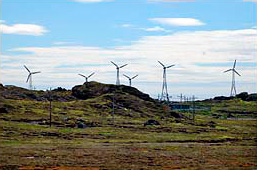 We took significant steps toward the future integration of wind generation into our provincial electricity system through the awarding of two contracts for over 50 megawatts of wind power on the island.
Newfoundland and Labrador has a world-class wind resource. Wind power is a clean, stable, cost-effective source of energy and Hydro has been making a lot of progress to tap this valuable energy source.
Hydro operates three separate systems in the province. The Island Interconnected System; the Labrador Interconnected System; and the Isolated Diesel Systems, of which there are 21 isolated communities powered by diesel generation systems located in remote coastal communities around the province.
In 2006, Hydro took some significant steps toward the integration of wind generation into the provincial electricity system and looked closely at the opportunities that exist to incorporate wind power into each of these separate systems. The strategy for each is a unique as the province, with a different focus in each of the three regions.
Island of Newfoundland
Currently, the Island Interconnected System is isolated from the North American grid and has an existing generating capacity of 1,919 MW provided by approximately 65% hydroelectric and 35% fossil fuel generation. Wind power on the island electricity system plays an important energy and environmental role. However, because the island system is not connected to the mainland, there is limited potential to incorporate large amounts of wind energy into this system. The focus for wind power generated on the island is to supplement Hydro’s existing energy supply and help reduce our reliance on thermal generation.
In late 2006, Hydro awarded two contracts to provide over 50 MW of wind power to the island -27 MW in St. Lawrence and another 24 MW in Fermeuse. Hydro expects both projects to be in service by early 2009.
Both projects will allow Hydro to reduce fossil-fired generation at the Holyrood Thermal Generating Station (Holyrood Thermal Generating Station). Annually, the environmental impacts from the wind projects will include:
- a reduction in fuel consumption by 300,000 barrels. That’s approximately 14% of Holyrood Thermal Generating Station’s production and 14% of all emissions;
- a reduction in sulphur dioxide emissions by 969 tonnes;
- a reduction in carbon dioxide emissions by 149,000 tonnes, and;
- generation of green energy for 12,000 homes.
Back to Top
Labrador
Labrador has a significant wind resource and development potential for thousands of megawatts. The development of this resource presents different opportunities from that on the island. Since Labrador is connected to the North American electricity grid, the focus of wind energy in Labrador could be for both domestic use and for export.
In December, 2006 Hydro installed four wind monitoring towers near Churchill Falls in an area known as Ranger Lake to assess the potential of the wind resource in the area of the Smallwood Reservoir in Labrador. Monitoring will provide valuable input to determining the potential of the resource and the feasibility of development. Hydro is examining the wind potential from a system perspective including interconnection, power purchase agreements and technical integration issues, including integration with the Lower Churchill Project.
Isolated Diesel Systems
The remote island community of Ramea, on the South Coast of Newfoundland, has been the location of a pilot project with wind and diesel generation since 2004. Building on this existing system in Ramea, Hydro is undertaking a research and development project to incorporate hydrogen to develop an environmentally-friendly energy solution to be used in small, isolated electrical distribution systems. Since September 2004, Hydro has purchased almost 800,000 kilowatt hours of energy from the wind pilot project, offsetting over 216,000 litres of fuel.
Hydro relies on diesel-fuelled generation systems to provide power to 21 small, coastal systems across the province.
Since 2004, the remote island community of Ramea, on the South Coast of Newfoundland, has been the location of a pilot project with wind and diesel generation. Since then, Hydro has purchased almost 800,000 kilowatt hours (kWh) of energy from Frontier Power Systems and offset over 216,000 litres of fuel. Building on this existing, successful wind-diesel system in Ramea, Hydro has begun a five-year research and development project to integrate hydrogen with wind power and diesel generation. This project is focused on developing an environmentally-friendly energy solution to be used in small, isolated electrical distribution systems.
This unique energy project has the potential to significantly reduce Hydro’s reliance on diesel generation to provide clean, renewable energy to its isolated customers. A successful project will produce a reliable and consistent energy supply and help reduce greenhouse gases and other emissions associated with diesel generation.
|
|
|